
Home › Blog › Friendsgiving ideas
Friendsgiving ideas: how to plan a relaxed dinner with friends (and your partner)
Friendsgiving is a dinner with friends that borrows the shape of a holiday feast. Everyone brings something, the table gets crowded, and the evening is more about who is there than about the food. It has no official rules, which is why it works so well: you can make it as fancy or as casual as you like, and nobody has to travel home.
This guide covers Friendsgiving ideas for small and larger groups: how to plan, how to organise a potluck without chaos, menu ideas, drinks, decor, games, a countdown timeline, tips for couples hosting together and what to do when something goes wrong. It is practical advice from us. Check food allergies and diet needs with your guests, and check what is available and safe where you live.
What Friendsgiving is, and when to do it
Many people hold a Friendsgiving in November, before or after a family holiday, but there is no rule. You can host it any time you want an excuse to gather people you like, and it works just as well in a small flat as in a big house.
It suits several situations: friends who live far from family, couples who want to host, new neighbours, work friends or anyone who wants a holiday meal without the family pressure.
Decide the basics first
Before you invite anyone, settle five things.
- Date and time. Choose a weekend afternoon or evening. Ask guests for their availability first if the group is small.
- Guest list and size. Count the chairs you really have. Six to ten people suits most homes.
- Format. Potluck, host cooks the main, or fully catered. Potluck is the most relaxed and the most common.
- Budget. Decide what you will spend and what guests bring.
- Space. Where will people sit, eat, put coats and talk? A small flat can host if you plan.
Choosing your format
Classic potluck
You cook the main dish, guests bring sides, desserts and drinks. It is cheap, varied and sociable.
Host cooks, guests bring drinks and dessert
Better when you want more control over the menu or when guests are less confident cooks.
Everyone cooks together
Assign tasks. One chops, one stirs, one bakes. The cooking becomes part of the evening.
Dessert-only or appetizer-only
A lighter option if you do not have a table for a full meal.
Themed
Pick a theme, such as a country, a colour or a cozy autumn dinner, and ask guests to match their dish.
How to run a potluck without chaos
- Use a shared list. A group chat or a shared note where people claim dishes avoids five bowls of mashed potatoes.
- Assign categories. Starters, mains, sides, vegetarian options, desserts and drinks.
- Ask about diets and allergies in the invite. Label dishes on the table.
- Check the kitchen. Think about oven space, reheating and serving plates.
- Tell people how to bring food. Ready to serve, or needing a short reheat.
- Have extras. A few spare plates, cups, napkins and cutlery.
- Plan leftovers. Ask guests to bring a container to take some home.
Menu ideas
You can follow a traditional holiday menu or build your own.
Mains
- Roast chicken or turkey. A whole bird is a good centrepiece. If you are cooking for a small group, a roast chicken or a turkey breast is easier.
- Vegetarian main. Stuffed squash, a mushroom wellington or a hearty pasta bake.
- Slow-cooked dish. A stew or a braise can cook while you host.
Sides
- Mashed or roasted potatoes.
- Stuffing or a bread-based side.
- Roasted vegetables. Carrots, Brussels sprouts or squash.
- A big fresh salad to balance the heavy dishes.
- Bread and butter, warm if you can.
- A gravy or sauce.
Desserts
- Pie. Apple, pumpkin or pecan are classics.
- A crumble or crisp. Easy and forgiving.
- A cheese plate with fruit.
- Cookies or small bakes that people can pick up.
Drinks
- A signature drink such as warm spiced cider, hot chocolate or a seasonal cocktail, with a non-alcoholic option.
- Wine or beer, if guests drink alcohol.
- Water, tea and coffee after dinner.
Remember to offer something for everyone, including guests who do not drink alcohol.
Setting the table and the mood
You do not need a fancy table. A few small things change the feeling.
- Lighting. Use candles, string lights or lamps instead of overhead lights.
- Music. A playlist in the background that is quiet enough for talking.
- Seasonal touches. Leaves, small pumpkins, a runner or a simple centrepiece.
- Name cards or a simple seating plan if your group is new to each other.
- A place for coats and bags so the table stays clear.
- A cosy corner for people who want to sit away from the crowd.
Games and activities
Something small to do between courses can make the evening feel special.
- Gratitude round. Each person shares one thing they are thankful for this year.
- Table questions. Place a card at each seat with a conversation starter.
- Board or card games for after dinner.
- A trivia quiz about the group.
- Photo moment. Take a group photo at the start, before the food is gone.
- Walk after dinner. A short walk helps digest and clears the table of talkers.
- Secret toast. Ask each guest to bring one sentence to say about someone at the table.
- Dessert tasting vote. Rate the pies and award a title.
Timeline: how to prepare
Two to three weeks before
Set the date, send invitations, ask about diets and create the dish list.
One week before
Confirm numbers, plan the menu, check you have enough plates, glasses and chairs, and make a shopping list.
Two to three days before
Shop, clean the main areas and prepare anything that keeps, such as sauces and desserts.
The day before
Set the table, prepare dishes that can be made ahead, chill drinks and make a cooking schedule for the day.
The day itself
Start cooking early, keep a simple timeline with times written down, and leave an hour before the guests arrive to change and relax. Ask a friend to help with drinks.
A simple invitation
Keep the invitation short and clear. Include the date, time, address, what to bring, how to claim a dish and a note to mention any diet or allergy. For example:
"Friendsgiving at ours on Saturday at 6 pm. We are cooking the main. Please bring a side, dessert or a bottle, and add what you are bringing to the shared note so we do not end up with six desserts. Tell us about any allergies. Come hungry."
A friendly tone and a clear task for each guest are what make a potluck run smoothly. Send a reminder two days before with the final list.
Hosting as a couple
Hosting together is a shared project, and it can be a good test of teamwork or a source of friction. A few tips:
- Split the jobs before the day. One does food, the other does drinks, music and clean-up, for example.
- Agree on a budget. Avoid surprises on the day.
- Agree on a signal. A phrase like "I need five minutes" lets you step out without a fight.
- Do not criticise in front of guests. Save notes for later.
- Celebrate the result. After everyone leaves, sit down together with a drink and tell each other the best moment.
- Do something nice for each other the next day. A slow breakfast or a walk.
For more ways to spend time as a couple, see things to do with your partner and our fall bucket list.
Friendsgiving on a budget
- Make it a potluck. Everyone contributes, so you pay for less.
- Pick cheaper cuts and dishes. Stews, roasted vegetables and pasta stretch further.
- Use what you have. Plates, glasses and candles from home.
- Skip fancy decor. A few leaves and candles do the job.
- Ask for drinks. Guests can bring a bottle.
- Cook ahead. It saves stress and sometimes money.
See also cheap date ideas for more low-cost ideas.
If you live far from friends or family
If you cannot gather in person, a video Friendsgiving works too. Everyone cooks the same dish or their own, sets up a laptop at the table and eats together. Play a short game, share a toast and keep it short enough to feel fun. If you are in a long-distance relationship, you can do this with your partner using long distance date ideas as a guide.
Make it feel like yours
The best Friendsgivings have one small tradition that repeats each year: a toast, a game, a dish that always appears or a photo in front of the same wall. Pick one thing this year and write it down, so you can bring it back next year. A tradition does not need to be big. It needs to be easy to repeat.
When things go wrong
- The turkey is not ready. Carve and serve what is done, start with starters and keep the mood relaxed.
- A guest brings something unexpected. Say thank you and add it to the table.
- Someone has a dietary need you missed. Offer sides they can eat and make a note for next time.
- The table is too small. Use a coffee table, a floor picnic or a buffet.
- Tension between guests. Change the conversation, offer a game or give people a task.
- You are exhausted. Accept help. Everyone can wash a plate.
Most guests will not remember a small mistake. They will remember the company.
After the dinner
- Say thank you. A message the next day to guests.
- Share photos. Make a shared album.
- Divide leftovers. Pass them around before everyone leaves.
- Note what worked. A short list for next year saves time.
- Plan the next one. A tradition starts with a second time.
Where Buffaly fits
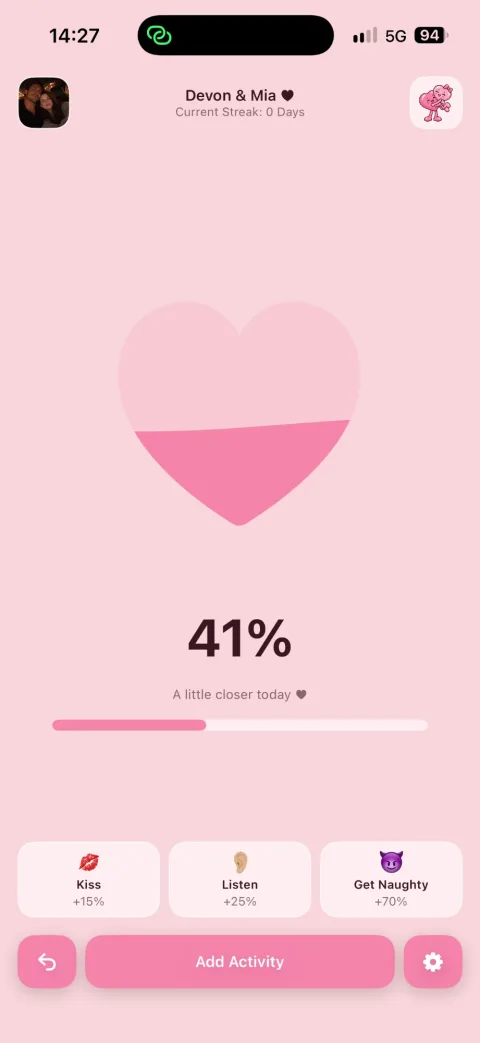
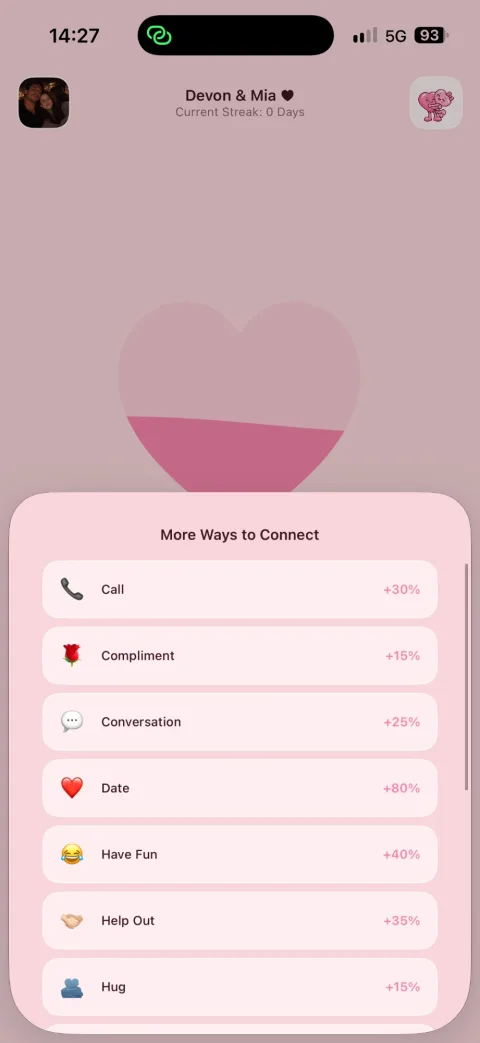
Buffaly is an iPhone app for couples who are already together. You connect with a 4-character code and share one heart. Buffaly does not plan dinners and does not include friends. If you host a Friendsgiving as a couple, either of you can log it afterwards. Have Fun adds 40 percentage points to the shared heart for 30 hours, and Help Out adds 35 for 30 hours. The heart slowly empties, so it shows when you last made time for each other.
What Buffaly is not: it is not a quiz or content app, not a messaging app, and it does not share your location. It is an entertainment tool, not a medical, psychological or counselling service. The download is free. Using Buffaly needs a subscription, and one subscription covers both partners; the price is shown in the App Store in your own currency before you subscribe. It needs an iPhone with iOS 17 or later; there is no Android version yet.
Frequently asked questions
What is Friendsgiving?
Friendsgiving is a dinner with friends that follows the shape of a holiday feast, usually as a potluck where everyone brings a dish. It has no fixed date or rules.
How do you plan a Friendsgiving?
Choose a date and format, count your chairs, create a shared dish list, ask about diets and allergies and follow a simple timeline starting two to three weeks before.
How many people should come to Friendsgiving?
Six to ten suits most homes. Count the chairs and table space you really have before you invite.
What should you serve at Friendsgiving?
A main dish such as roast chicken, turkey or a vegetarian bake, plus sides, a salad, bread, desserts and a signature drink. Offer vegetarian and non-alcoholic options.
How do you organise a potluck without duplicate dishes?
Use a shared note or group chat where guests claim dishes, assign categories and ask about diets. Label dishes on the table.
What games can you play at Friendsgiving?
A gratitude round, table question cards, trivia about the group, board games and a dessert vote are easy and low effort.
Does Buffaly plan Friendsgiving?
No. Buffaly does not plan dinners or include friends. If you host as a couple, you can log it afterwards and the shared heart shows both of you that you made time for it.