
Home › Blog › Feeling neglected in a relationship
Feeling neglected in a relationship: what to do and how to talk about it
Feeling neglected in a relationship is lonely, and it often shows up quietly: your partner is physically there, but always on their phone, always busy, never really listening. This guide helps you name what is missing, bring it up without a fight, and make small changes that help. It also covers what to do if you are the one who has been told you are neglecting your partner. Neither of you is the villain here. This is advice and opinion from a small team, not therapy.
What feeling neglected can mean
Feeling neglected usually means a need is not being met: attention, time, affection, help, or being listened to. It does not always mean that your partner does not care. Stress, work, tiredness, a new baby, a health problem and phones can pull attention away without anyone intending it. It is still real, and it is worth talking about. Anyone in any kind of relationship can feel this way, whatever their gender.
Common ways it shows up
- Time: you share a home but rarely share an evening.
- Attention: you tell a story and get "mm-hm" from behind a screen.
- Affection: fewer hugs, kisses or small touches than you used to have.
- Effort: you are always the one planning, asking and reaching out.
- Support: you carry a lot at home or in your head and nobody notices.
- Interest: nobody asks about your day, your worries or your plans anymore.
If one or two of these ring true, you are not being dramatic. It is a signal that something needs attention.
Step 1: Work out what exactly is missing
Before you talk, name it for yourself. "I feel neglected" is hard to act on, because your partner will not know where to start. A specific wish is easy to act on. Here is how to translate:
| What you feel | What you might actually be missing | A request that is easy to say yes to |
|---|---|---|
| "You never have time for me." | Unhurried time together | "Could we keep Thursday evening free, just us?" |
| "You don't listen." | Full attention for a few minutes | "When I tell you about my day, could you put the phone down for ten minutes?" |
| "You don't care." | Small signs of interest | "Could you ask me one question about my day when you get home?" |
| "I do everything." | Shared load, and being noticed | "Can we split these three chores differently this week?" |
It also helps to ask yourself one honest question: is this about the last few weeks, or has it been building for a long time? A rough patch calls for a small reset. A long pattern calls for a bigger conversation, and possibly outside help.
Step 2: Bring it up without a fight
- Pick a calm moment. Not in the middle of an argument, not when one of you is leaving, tired or hungry. A walk side by side often goes better than a face-to-face stare-down.
- Ask for a time. "Can we talk about something that matters to me this weekend? It is not a complaint about you." This gives your partner time to prepare instead of being ambushed.
- Start with the feeling and a specific example: "I have been feeling lonely in the evenings, when we are both on our phones."
- Say what you would like, in a way that is easy to say yes to: "Could we put our phones away for dinner three times this week?"
- Ask how it is for them. They may be stressed or feel neglected too.
- Agree on one small thing and check in again in two weeks.
Scripts you can adapt
- Opening: "I miss you. Not because you are doing anything wrong, I just feel a bit far from you lately, and I would like us to fix that together."
- When you are not sure what is wrong: "I notice I feel lonely even when we are in the same room. Do you feel it too, or is it just me?"
- When it is about attention: "When I am talking and you are looking at your phone, I feel unimportant. I know you do not mean it that way. Could we try ten minutes of full attention each evening?"
- When you are hurt: "I am a bit sad about this, and I do not want to turn it into an argument. Can I tell you what I need, and then you tell me what you need?"
- Closing: "Thank you for listening. Can we try this for two weeks and then see how it feels?"
The common thread: it is about the feeling and a request, not a verdict on your partner's character. Words like "never" and "always" turn a request into an accusation, and most people respond to an accusation by defending themselves. A good place to continue is relationship check-in questions, which gives you a regular, low-pressure way to have this kind of talk.
If your partner is always on their phone
Phone habits are one of the most common reasons people feel ignored. For many couples the phone is not the real problem. It is just where the attention goes. The goal is not to ban phones, it is to protect a few moments when you are both really there.
Try to talk about it as "us and the phones", not "you and your phone". Most of us pick up our phones out of habit, boredom or stress, and that includes the person complaining about it.
Phone agreements that work for many couples
- Meals: phones face down or in another room, at least for dinner.
- Bedroom: a charging spot outside the bedroom, so the last and first minutes of the day are for each other.
- Talking: when one of you is telling something, the phone goes down. If you really must check something, say so: "Give me one minute, then I am all yours."
- One phone-free evening a week, maybe with a simple plan like cooking together or a walk.
- Rules for both. If only one person changes, it feels like a punishment. Agree on it together and keep to it together.
- Review after two weeks: what helped, what felt silly, what to change.
What to avoid
Do not check your partner's phone, keep a record of how often they use it, or snap a photo of them scrolling as "proof". That tends to make things worse, because it turns a shared habit into surveillance and a fight about who is right. If a phone is hiding something that worries you, that is a different and bigger conversation about trust. Have it directly, or with a counsellor.
If your partner brushes it off
Some people do not realise how much the phone shows up in their day. A gentle, specific example often lands better than a general complaint: "Last night at dinner I told you about my meeting and I did not feel heard. Could we try again with phones away?" If you hear "you are overreacting", stay calm and repeat how it feels for you. You can be both kind and clear.
If you have been told you neglect your partner
It can hurt to hear. You may feel you are working hard, that you love them, and that it is unfair. All of that can be true, and your partner can still feel alone. Both can sit side by side.
What can help
- Pause before defending yourself. You do not have to agree with every detail. Start with: "Thank you for telling me. I want to understand."
- Ask a real question: "What would help you feel more cared for?" Then listen without correcting.
- Name your own side, calmly and later if needed: "I have been really stretched at work. I am not ignoring you, but I can see it feels that way."
- Pick one thing and do it consistently. Small and regular beats big and rare. A message at lunchtime, ten minutes of full attention in the evening, a hug when you get home.
- Check in after a couple of weeks: "Is this helping? What would make it better?"
If you are overwhelmed yourself, say so. Feeling neglected and feeling overwhelmed often go together, and telling each other that is a good start. See our 15 ways to make your partner feel loved for small, everyday ideas.
Common mistakes
- Saving it up. Months of silence followed by one big list is hard to hear. Raise small things early.
- "You never" and "you always". They sound like a verdict and invite a fight.
- Testing your partner. Waiting to see if they notice, or hinting, rarely works. Ask clearly.
- Going quiet as a punishment. Withdrawing feels safer than asking, but your partner may just think everything is fine.
- Ultimatums in the heat of the moment. They are hard to take back and rarely lead to real change.
- Scorekeeping. Counting who texted last or who did more turns care into a contest. Talk about the pattern, not the tally.
- Asking for everything at once. One small change is easier to keep than five.
- Making it only about phones. Sometimes the phone is a symptom of stress, boredom or distance. Ask what is underneath.
Rebuild a little closeness every week
Talking is the start. Closeness comes back through small, repeated moments. Some ideas that cost little:
- A fixed time each week that is just for the two of you, even if it is a walk or a coffee. Our list of date night ideas at home has plenty of low-effort ones.
- Ten minutes at the end of the day where you each say one good thing and one hard thing.
- One small kind gesture a day: a message, a hug, a "thinking of you".
- If things feel very distant, how to reconnect with your partner goes deeper.
When to get help
If you have talked several times and nothing changes, if you feel unsafe, or if the neglect is part of a pattern that makes you feel small or controlled, speak to someone you trust or to a licensed professional. A couples therapist can help you both. An app is not a replacement for that.
A safety note: if you are afraid of your partner, if they control who you see, where you go or what you spend, or if they threaten or hurt you, that is not "just neglect" and not something to fix with a conversation script. Please contact a local support service or someone you trust, and do not try to handle it alone.
Where Buffaly fits
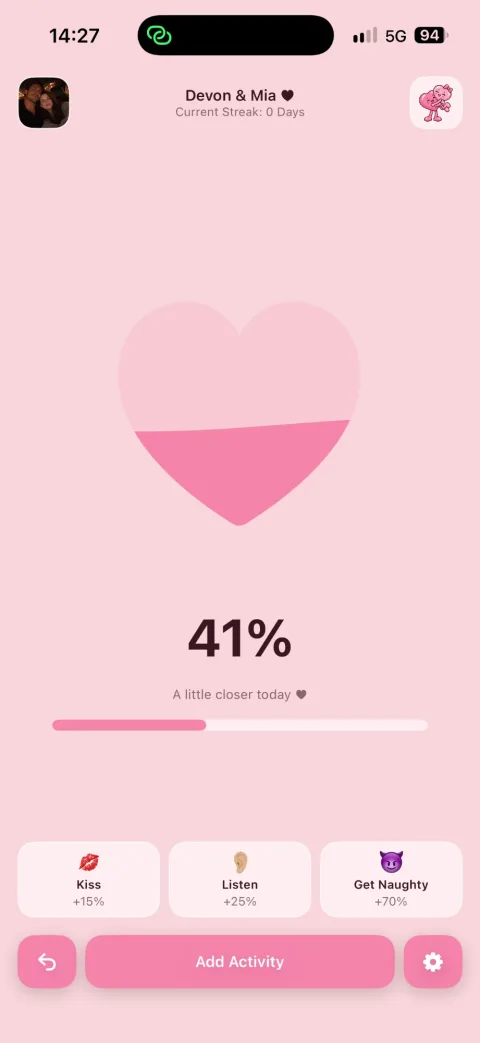
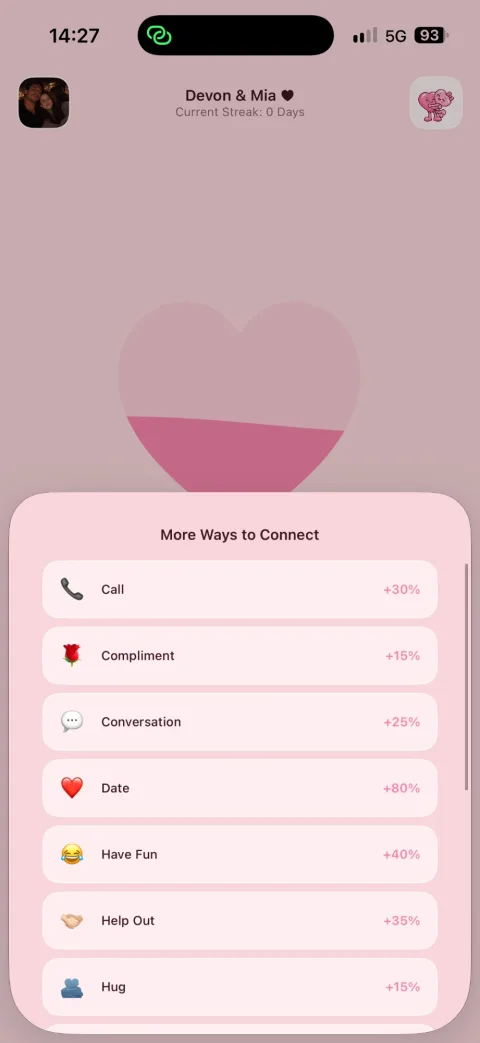
Buffaly is an iPhone app for couples who are already together. You share one heart, and either of you can log a real moment, such as a Conversation, Listen, Compliment, Hug or Date. The heart is shared, there is no "you versus them" score, and it slowly empties over time. Used well, it is a gentle shared reminder to make time. Used badly, it can become a stick to hit your partner with. Please do not use it as evidence in an argument. Use it as a conversation starter and a reminder.
What Buffaly is not: it is not a quiz or content app, not a messaging app, and it does not share your location. It is an entertainment tool, not a medical, psychological or counselling service. The download is free and your first action is free. Then there is a 7-day free trial, then EUR 4.99 per month or EUR 29.99 per year for both partners. It needs an iPhone with iOS 17 or later; there is no Android version yet.

Frequently asked questions
Why do I feel neglected in my relationship?
It usually means a need is not being met: time, attention, affection, help or being listened to. Stress, work and phones can pull attention away, even when your partner cares.
Is it normal to feel neglected in a relationship?
Many people feel it at some point, especially during stressful phases such as a new job, a baby or illness. It is common, but it is still worth talking about early rather than letting it grow.
How do I tell my partner I feel neglected?
Pick a calm moment, describe the feeling and one specific example, and ask for one small change. Avoid "you never". Ask how things are for them too.
What should I do if my partner is always on their phone?
Talk about it as a shared habit, not a personal attack. Try phones away at meals, a charging spot outside the bedroom and one phone-free evening a week, and agree on it for both of you.
What should I do if I am told I neglect my partner?
Listen first and try not to defend yourself straight away. Ask what would help them feel more cared for, pick one small thing and do it regularly, and check in after a couple of weeks.
Do men and women feel neglected differently?
Anyone can feel neglected, and what is missing differs from person to person: time, touch, help, words or attention. Ask your partner what it looks like for them instead of guessing.
Is feeling neglected a sign the relationship is over?
Not necessarily. It is a sign that something needs attention. If you have talked several times and nothing changes, consider a couples therapist.
Can Buffaly show my partner that they neglect me?
Buffaly is not meant as proof or a scoreboard. The heart is shared, and there is no per-partner score. It works better as a gentle reminder to make time than as a way to win an argument.