
Home › Blog › Acts of service love language
Acts of service love language: what it means and 40 ways to show it
If your partner lights up when you do the washing-up without being asked, or feels hurt when you promise to help and forget, acts of service may be a big part of how they feel loved. This guide explains what the acts of service love language means, how to recognise it, 40 ways to show it and how to keep it fair, so it feels like love and not like a chore chart.
What "acts of service" means
The idea of love languages is a popular way to talk about how people give and receive affection. The five usually listed are words of affirmation, quality time, receiving gifts, acts of service and physical touch. It is a framework for conversation, not a scientific test, and most people feel loved in several ways. Still, many find it useful to notice which one matters most to them or their partner.
Acts of service means that someone feels loved when you do something helpful for them. It is not about grand gestures. It is about noticing what would lighten their load and doing it, ideally before they have to ask. The message behind the act is: I see you, I care and I want your life to be easier.
Signs your partner may value acts of service
- They thank you warmly when you help, even with small things.
- They often do things for you, such as fixing, cooking or running errands, without being asked.
- They feel upset when promises to help are forgotten, more than when words are missing.
- They talk about how tired they are, hoping you will notice.
- They feel supported when you take over a task.
- They complain about unequal workloads more than about missing compliments or gifts.
- They say things like "If you really cared, you would have..." about practical matters.
None of these is proof. The best way to find out is to ask: "When do you feel most looked after by me?" and listen without defending yourself.
Why it can go wrong
Acts of service is also the language most likely to turn into resentment. One partner quietly does most of the work and feels unseen. The other thinks everything is fine because nobody complained. Or one partner does helpful things the other does not value, while missing what would really help. A person who always cooks for you may be giving love in the way they would like to receive it, while you would have preferred a hug.
To avoid this, talk about what help actually means to each of you, and say thank you out loud. Gratitude closes the loop and tells the giver the act landed.
Everyday acts of service at home
- Make their coffee or tea the way they like it.
- Do the washing-up without comment.
- Take out the bins and the recycling.
- Change the bedding.
- Fill their car with fuel or check the tyres.
- Prepare tomorrow's lunch.
- Fold the laundry you normally leave in the basket.
- Order the groceries so they do not have to.
- Clear the table and wipe the surfaces after dinner.
- Tidy the room they use for working.
Pick tasks they dislike, not the ones you prefer. The most loving act is often the least pleasant one.
Acts of service for stressful times
- Take over the planning for the week.
- Cancel something on their behalf, with permission.
- Bring them a meal while they work.
- Run a bath and leave them alone for an hour.
- Handle the phone calls they dread.
- Do the school, nursery or pet run.
- Sort the paperwork or a form they have been avoiding.
- Drive them to an appointment.
- Take care of a sick day, with soup and tea.
- Pick up their prescription.
During hard times, doing is often easier than talking. A cooked meal says "I am here" without asking them to explain how they feel.
Acts of service for your career, projects and goals
- Read their draft, CV or presentation and give kind feedback.
- Cover the evening chores while they study.
- Book a quiet space or an hour of childcare for their project.
- Help them practise for an interview.
- Share their work with people who might help.
- Support the early start with breakfast.
- Attend an event that matters to them.
- Take a task off their list on a deadline week.
Supporting someone's ambitions is a lasting form of service. It also tells them you believe in what they do.
Acts of service from a distance
- Order their favourite food to their door.
- Book a repair or a delivery for them.
- Handle a bill or a booking online.
- Send a care package with something practical, such as chargers, snacks or warm socks.
- Plan their trip to see you, including the logistics.
- Look up something they need and send the link.
- Call the people they cannot reach during the day.
Distance makes practical help harder, so thoughtful acts stand out. See also long distance date ideas and apps for long-distance couples.
How to ask for help without sounding like a complaint
If acts of service is your language, it is fair to ask for what you need. Be specific and kind. "Could you take over the dishes on weekdays?" works better than "You never help." Choose a calm time, and avoid asking in the middle of an argument. Offer something in return, or ask what would make their week easier. If you often feel the load is uneven, make a list together of all tasks, including invisible ones such as planning and remembering, and divide them fairly. Review it every few months. For a larger talk, our relationship check-in questions are a good guide.
It also helps to say thank you in detail: "Thank you for sorting the insurance, that was stressful and you made it easy." Specific thanks make the act feel valued and encourage more of it.
Balancing it with the other love languages
Even if acts of service matters most to you or your partner, a relationship needs a mix. Add words, time and touch to the practical help. A person who is thankful for your help may also love a kind message or a long hug. Try the two-week experiment in how to make your partner feel loved to see what works best for both of you, and keep checking in, because needs change with seasons of life.
A balanced mix also protects you from burnout. If you give only through doing, you may run out of energy. If you only receive help, you may forget to give back. Variety keeps the relationship healthy.
A weekly acts-of-service routine for two
Good intentions fade without a structure, so a small routine helps. Once a week, sit down for ten minutes and each name one task you would love the other to take off your plate, plus one thing you will do for them. Keep it light and write it down. Then do it before the week ends. Over a month, this builds a steady habit of noticing. It also surfaces the invisible work that one person often carries, such as remembering birthdays, booking appointments or planning meals, so it can be shared fairly.
- Sunday: share the lists and pick one task each.
- Midweek: a quick "how is it going?" message.
- Next Sunday: say thank you for what was done and choose the next tasks.
If you find the lists reveal a big imbalance, take it as information, not an accusation. Our guide on how to fix a relationship has ideas for talking about it calmly.
What to do if your partner does not seem to notice your help
Sometimes you do a lot and feel invisible. Before you assume they do not care, check three things. First, did you tell them what you did? People are not always aware of work done quietly. Second, is the help what they actually want? An elaborate meal can be less welcome than ten quiet minutes. Third, are they thanking you in their own way, perhaps with a hug or a favour in return, rather than with words? Once you have checked, say it kindly: "I would like you to notice when I do things for you." Specific, calm requests are easier to hear than hints. If you still feel unseen after several honest talks, read feeling neglected in a relationship for ways to bring up deeper concerns.
When it becomes too much: setting limits
Giving through service can slide into over-giving. If you always say yes, take on everything and never ask for help, you may end up exhausted and resentful. Acts of service should be a choice, not an obligation. It is fine to say, "I cannot do that today," or "Can we split it?" A good partner does not take the helper's work for granted and notices when they are tired. If you are the helper, schedule rest. If you are the receiver, offer help before you are asked. Fairness is a form of love in this language.
If your partner uses your willingness to help as a way to avoid responsibility, or if requests feel demanding or controlling, talk to someone you trust, such as a friend or a counsellor. Love should not feel like a debt.
A closing note
If acts of service is your partner's main language, the good news is that it is also one of the easiest to practise. You do not need money, talent or free time. You need attention and a willingness to do the small, unglamorous thing that makes their day a bit lighter. Start with one task this week, choose the one they would least like to do and do it quietly. Watch how they respond. Then ask what else would help. Over time, the habit of noticing becomes second nature, and the relationship feels less like two people sharing a flat and more like two people on the same team. Keep it kind, keep it fair and say thank you often, in both directions.
Where Buffaly fits
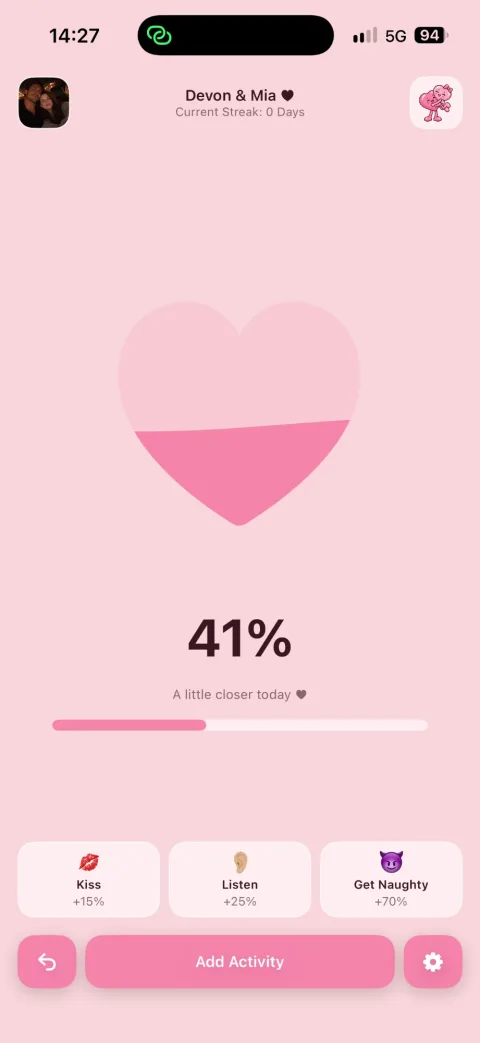
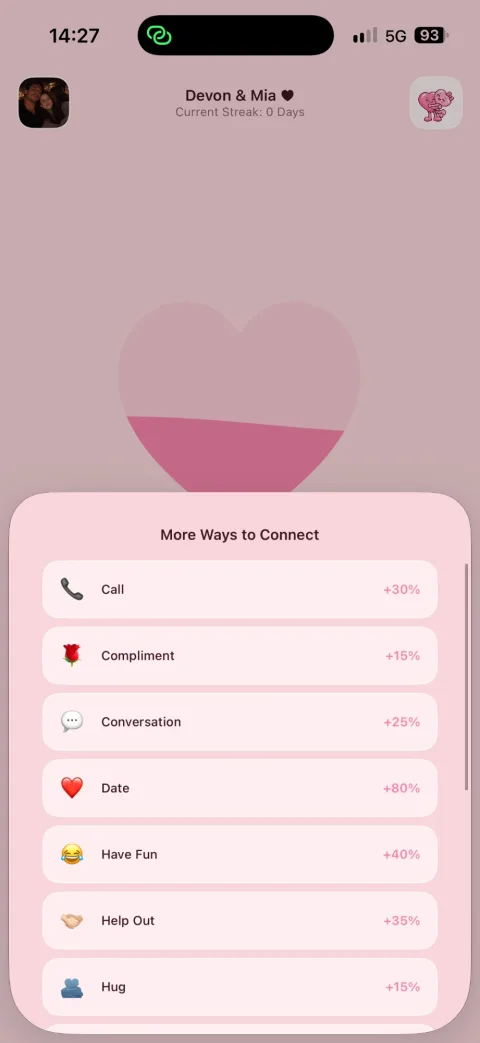
Buffaly's Help Out action is a small, practical way to log a helpful moment, and Buffaly asks what makes each of you feel loved when you set up. Buffaly is an iPhone app for couples who are already together. You connect with a 4-character code and share one heart. Hug, Kiss and Compliment each add 15 percentage points, a Conversation adds 25, a Date adds 80. The heart slowly empties, so it helps you keep topping up closeness instead of waiting for a big moment. It is meant to make small moments easier to remember. It will not make a relationship good by itself.
What Buffaly is not: it is not a quiz or content app, not a messaging app, and it does not share your location. It is an entertainment tool, not a medical, psychological or counselling service. The download is free and your first action is free. Then there is a 7-day free trial, then EUR 4.99 per month or EUR 29.99 per year for both partners. It needs an iPhone with iOS 17 or later; there is no Android version yet.

Frequently asked questions
What does acts of service mean in a relationship?
It means feeling loved when your partner does helpful things for you, such as chores, errands or practical support.
What are examples of acts of service?
Making coffee, doing the washing-up, cooking dinner, running errands, driving them somewhere or taking on a task they dislike.
Can acts of service cause resentment?
Yes, if one partner does most of the work without thanks or if the help does not match what the other person wants. Talk about it and say thank you.
How do I show acts of service from far away?
Order food to their door, handle a booking or bill, send a practical care package or plan their visit.
Can an app help?
Buffaly can remind you to make small moments happen. It is an entertainment tool, not a counselling service, and it works best alongside real talks and time together.