
Home › Blog › How to fix a relationship
How to fix a relationship: work out what is broken before you repair it
"Fix" is a big word. Most struggling relationships are not broken everywhere at once. Usually one or two things are off, and everything else feels bad because of them. This guide helps you work out what is broken, pick the first thing to repair and decide when it is time for outside help. It is general information, not therapy.
Step 1: Name what is actually wrong
Before you try to fix anything, sort the problem into one of these groups. You may recognise more than one, but pick the one that hurts most right now.
We do not feel close any more
Little affection, little fun, mostly logistics. This is drift, and the repair is small, regular closeness. Start with how to reconnect with your partner.
I feel overlooked or unimportant
You give more attention than you get, or you feel like you come last. See feeling neglected in a relationship.
We fight about the same things
The topic changes, the pattern does not. The repair is a calmer way of talking, which we cover below.
Someone broke a promise or lied
That is a trust problem, and it needs its own careful process. Read how to rebuild trust in a relationship.
We want different things
Different views on children, money, where to live or how to spend time can be talked through, but not wished away. This needs honest conversations, and often a therapist.
Step 2: Agree there is something to fix
You cannot repair a relationship alone, but you can start the conversation. Pick a calm moment, not mid-argument and not late at night. Begin with warmth and say what you want, not what they do wrong.
- "I care about us, and that is why I want to talk."
- "I have been feeling [lonely / stressed / far from you] lately."
- "Could we try [one specific thing] for a few weeks and see how it feels?"
Then listen. Your partner may see it differently, and their view is part of the picture.
Step 3: Fix the first thing, not everything
Trying to change everything at once usually collapses within a week. Choose one small change per problem and test it for four weeks. That is not a proven method, just a way to keep things manageable.
- Drift: one phone-free evening a week and one non-logistics message a day.
- Feeling overlooked: ask for one specific thing, such as ten minutes of undivided attention after work.
- Repeated fights: a rule such as "we pause when voices rise, and we return within a day".
- Broken promise: start with the steps in the trust guide linked above.
Step 4: Talk in a way that does not start a fight
- Start soft. "I felt hurt when the plan changed" lands better than "you always cancel".
- One topic at a time. Do not bring the whole history into one evening.
- Repeat back what you heard before you answer.
- Take breaks. If it escalates, say "I want to get this right, can we pause for 20 minutes?" and then really come back.
- Repair after a fight. A sincere "I am sorry for how I said that" is worth more than winning the point.
A short weekly talk keeps small issues from piling up. Our relationship check-in questions give it a simple shape.
Step 5: Be the partner you want to have
You can only change your own side of the pattern. Ask what you could do differently without waiting for the other person to go first. Our guide on how to be a better partner has twelve habits to try.
When it may need more than a blog post
Think about a licensed couples therapist if you keep having the same fight, if there is contempt or silence that does not lift, if there has been infidelity, or if you are not sure whether you want to continue. You can also see an individual therapist for yourself. If you ever feel unsafe, controlled or afraid, please contact a professional support service. Asking for help is not a sign the relationship has failed.
It is also valid to conclude that a relationship cannot be fixed. A guide like this cannot decide that for you.
Where Buffaly fits
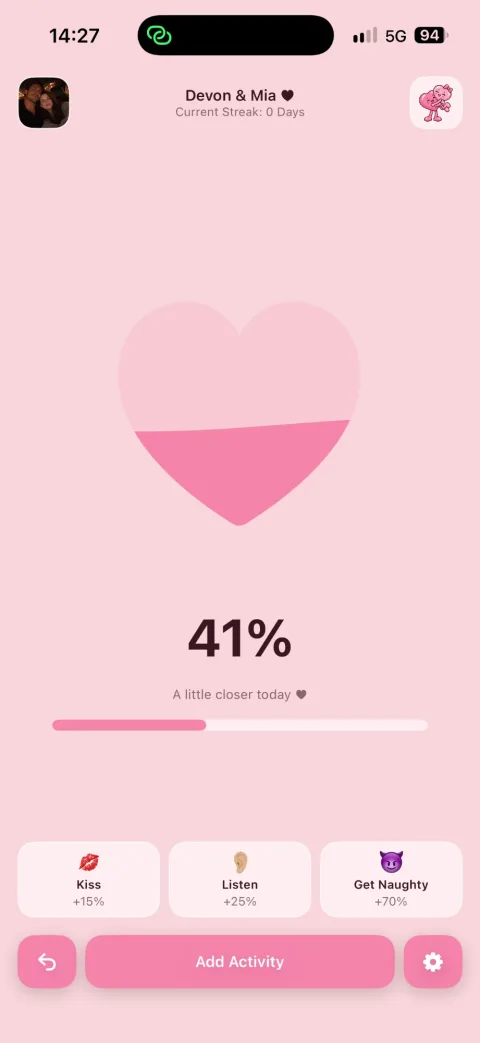
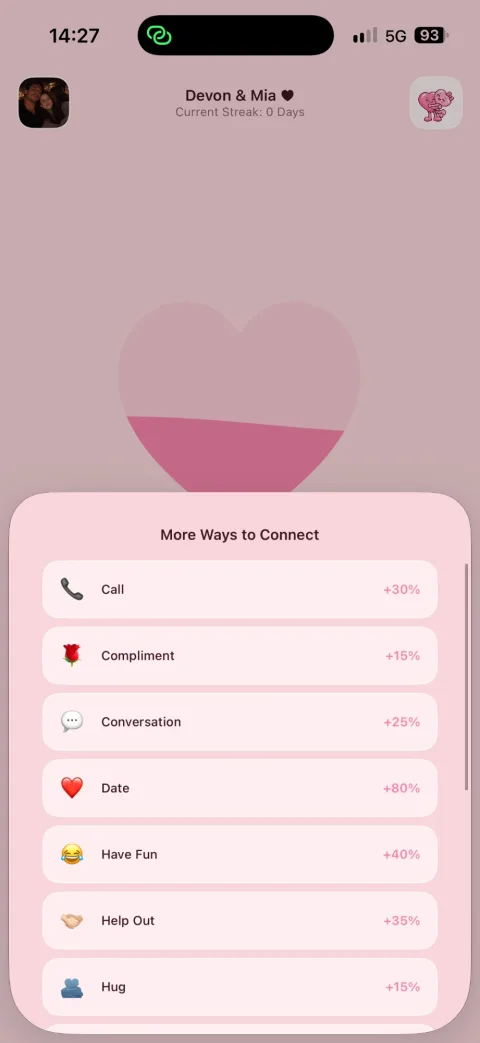
Buffaly is an iPhone app for couples who are already together. You connect with a 4-character code and share one heart. Hug, Kiss and Compliment each add 15 percentage points, a Conversation adds 25, a Date adds 80. The heart slowly empties, so it helps you keep topping up closeness instead of waiting for a big moment. It helps with the "drift" kind of problem, the small daily closeness that tends to disappear first. It does not fix conflict, broken trust or deeper issues.
What Buffaly is not: it is not a quiz or content app, not a messaging app, and it does not share your location. It is an entertainment tool, not a medical, psychological or counselling service. The download is free and your first action is free. Then there is a 7-day free trial, then EUR 4.99 per month or EUR 29.99 per year for both partners. It needs an iPhone with iOS 17 or later; there is no Android version yet.

Frequently asked questions
How do you fix a relationship that feels broken?
Work out what exactly is wrong (distance, feeling overlooked, repeated fights, broken trust or different goals), start a calm conversation, and repair one thing at a time. Get professional help if you are stuck.
Can a relationship be fixed if only one person is trying?
One person can change their own behaviour and open a conversation, but repair needs both. If your partner will not engage at all, a therapist can help you decide what to do next.
How long does it take to fix a relationship?
There is no fixed time. Small changes may show up in daily mood within weeks, but deeper issues can take much longer. A four-week test of one change is a reasonable start.
How do we stop fighting about the same thing?
Agree to pause when voices rise and to return within a day, start with softer wording, and stick to one topic. If the same fight returns anyway, a couples therapist can help find what is underneath.
Should we see a couples therapist?
If you are stuck, keep repeating the same fight, feel contempt or silence, or are dealing with infidelity, a licensed couples therapist can help. Many couples wait too long.
Can an app fix a relationship?
No. An app can remind you to make small moments happen, but it cannot replace honest talks, time together or professional help. Buffaly is an entertainment tool, not a counselling service.